Rodrigo de la Cruz and What the Pottery of San Agustín Oapan Tells
The artisan’s hand skillfully captures the stories of a small village in Guerrero, where pottery is an ancestral legacy that lives on to this day.
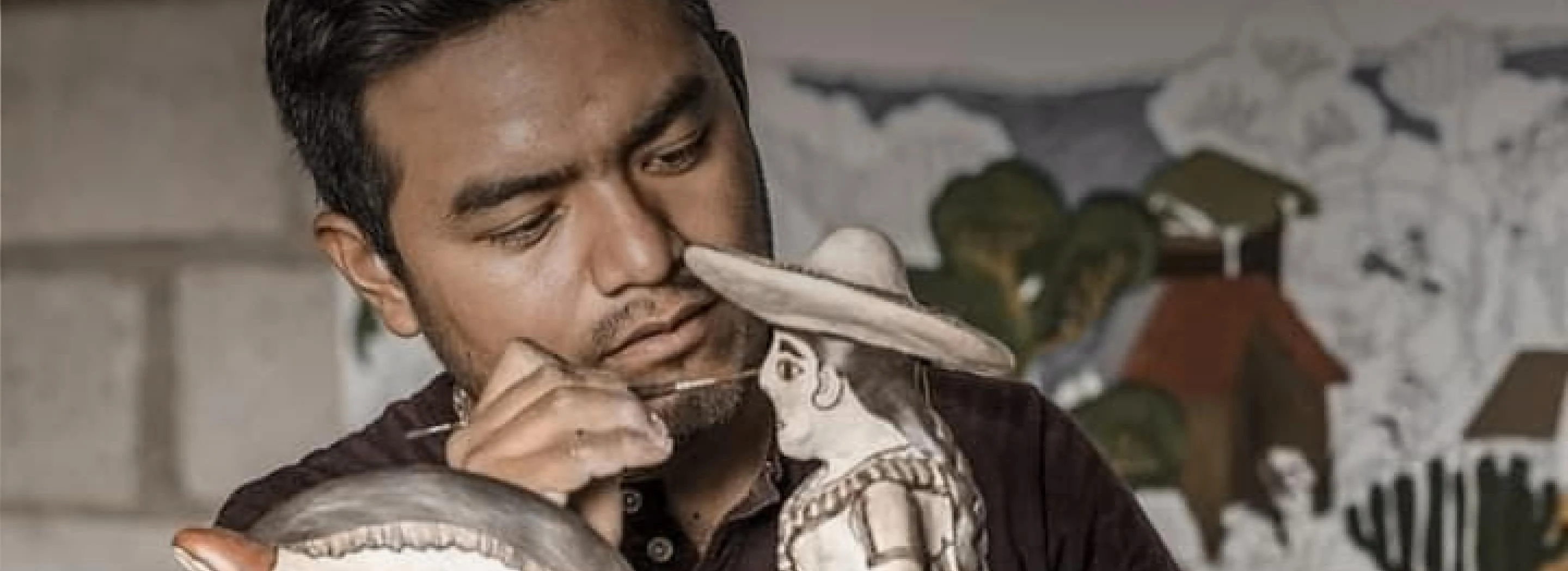
In San Agustín Oapan, a young boy named Rodrigo de la Cruz would sit beside his father and watch him paint. Before long, he would grab the brush and practice his own strokes —strokes that developed into a uniquely skilled hand, earning him recognition as a distinguished artist in Mexico and abroad.
“I started working with clay because of my family —my ancestors, my parents— and I learned from a young age, working,” he says.
His work is part of a living oral tradition, as it depicts the stories, customs, and landscapes of his community using natural slips.
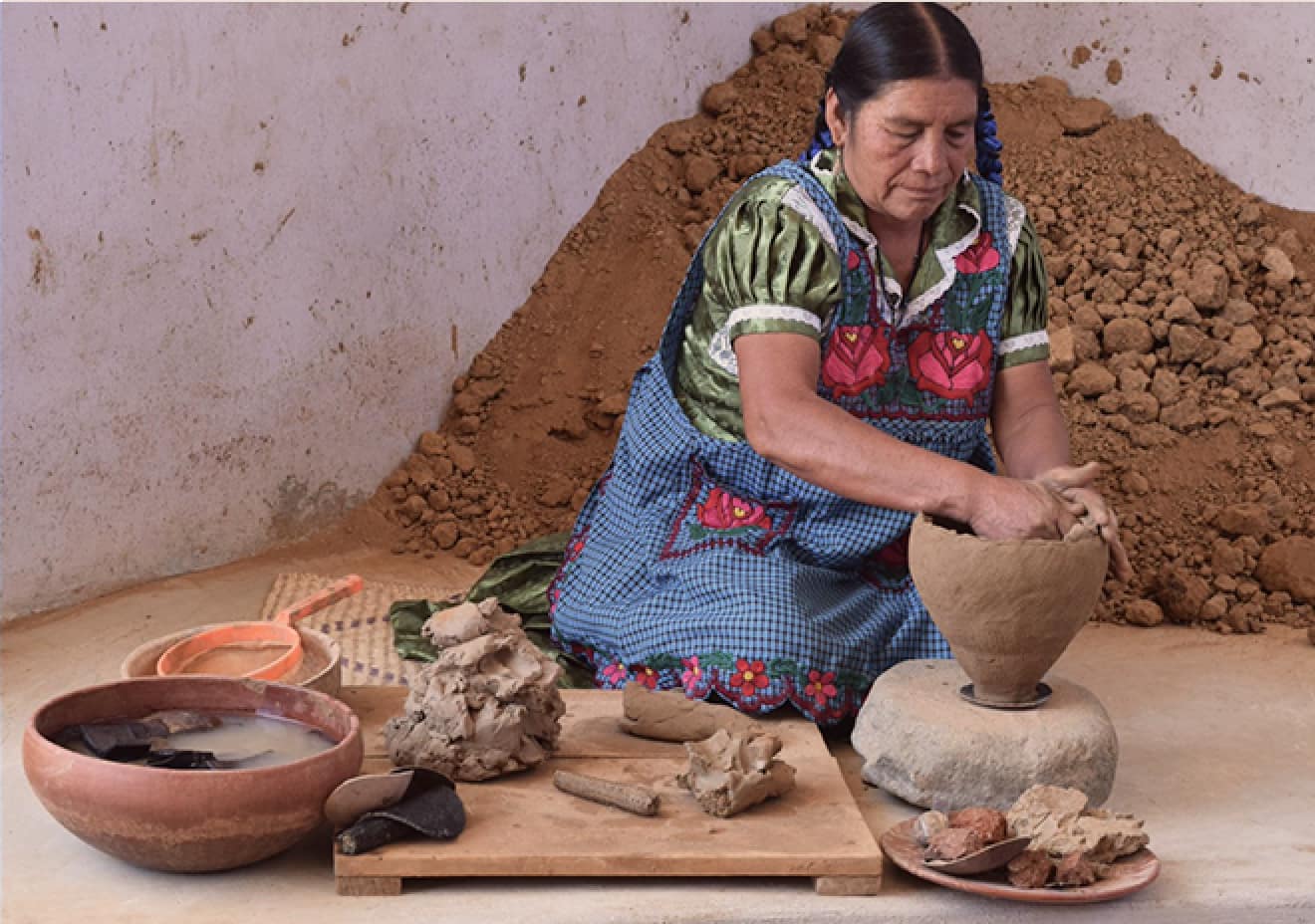
The pottery process in his town begins with the collection or purchase of clay and natural pigments, which are usually iron oxide-rich clumps. Those who collect the clay use picks and transport it with pack animals. Each artisan mixes different clays, sand, and a natural fiber harvested from the ceiba pentandra tree, known locally as pochote, to create their working material.
The pieces are built using the coil technique, with a dried corn cob used as a tool.
To fire the ceramic pieces in San Agustín Oapan, artisans build an improvised ground-level bonfire in an open space. Cow manure is used as fuel, and the pieces are supported by shards and bricks, then covered with asbestos sheets.
These firings are typically very quick, lasting no more than four hours. Most of the time is spent "preheating" the pieces—that is, gradually raising their temperature to about 200 degrees Celsius; once that point is reached, it’s time for the fire to fully engulf them.
In 2019, thanks to an educational exchange agreement signed by the National School of Ceramics with the Taoxichuan Jingdezhen International Studio, Rodrigo completed a two-month artist residency in China, where he shared and gained academic and personal experiences that have undoubtedly enriched his work.