Juana Gómez, the Jaguar Potter
Why are you making jaguars if they’re not going to sell?" Juana’s mother once told her. "You’re just wasting your time —better break them and make flowerpots!". But the nine-year-old kept shaping the feline figure that had captured her imagination through school textbooks.
From the small pieces she made as a child, Juana went on to create 70-kilogram jaguars, hand-painted with intricate designs and exceptional technique —work that has earned her national and international recognition.
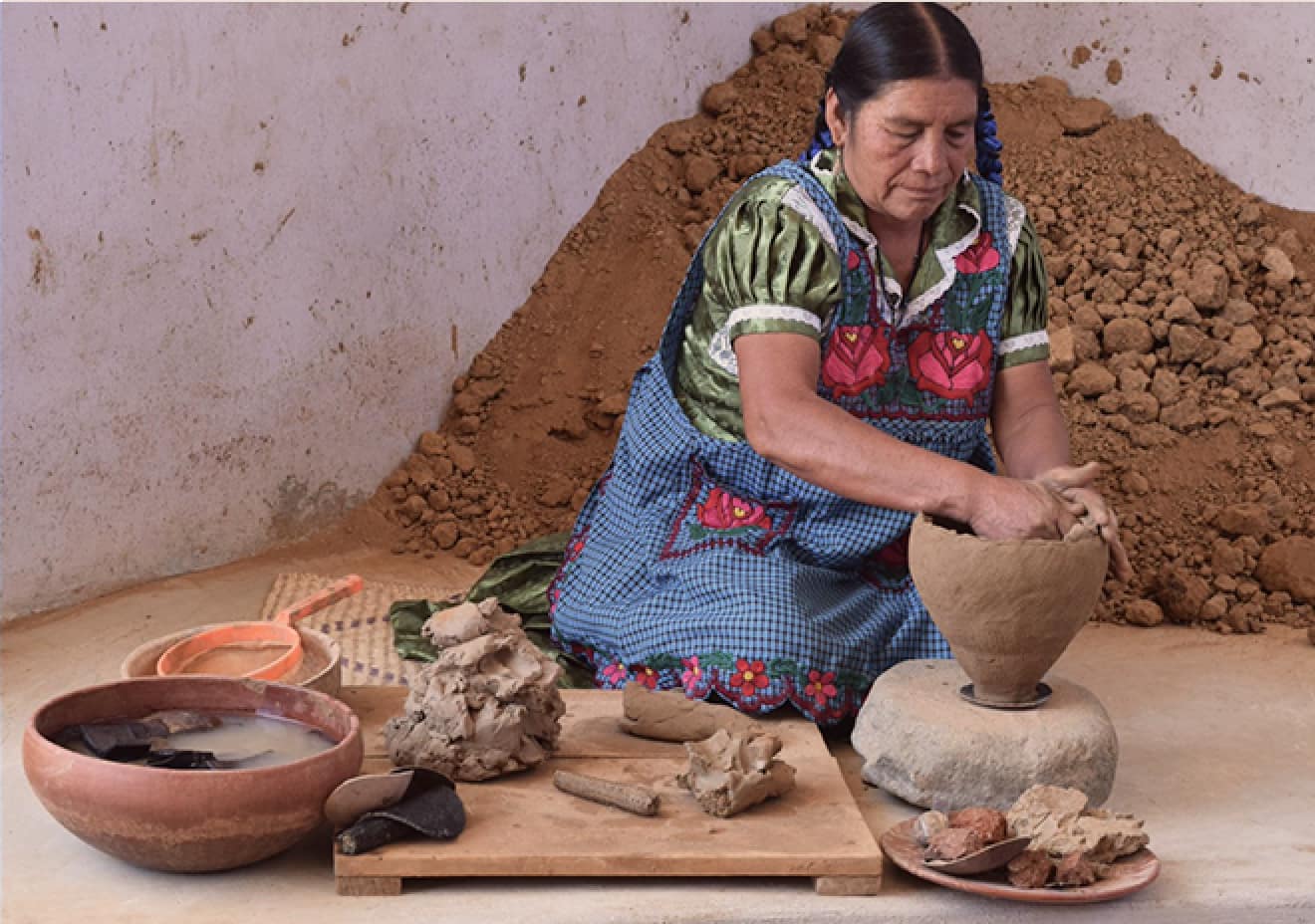
A native of the pottery community of Amatenango del Valle, Chiapas, Juana gathers sand just a few kilometers from her workshop, crushes it, and combines it with clay to create the paste that forms her figures, which she paints using natural slips.
"This beautiful animal is a Mayan god. For our ancestors, the white jaguar represented the day and the black one, the night. It was their guardian. That’s why I make them, and I feel their energy every time I shape them with my hands. I’ve never seen a real jaguar, only in my imagination or in books. That’s why each of my pieces is different," she says.
Her largest works take at least four months of daily labor, and her craftsmanship is so valued that fulfilling an order now takes a minimum of six months.
Beyond her artistic talent, Juana is known in her community for her generosity. All her children are involved in clay work, as is her extended family, who have learned the craft from her.
The National School of Ceramics brought the Smokeless Wood Kiln Program to Amatenango del Valle for the first time in 2017, training a group of 18 potters.
The response was overwhelmingly positive and sparked deep interest in the community, leading to the construction of a second kiln in 2020. The need to improve firing processes and protect health continued to grow, so two more kilns were built in 2021, one of them in Juana Gómez’s workshop. Finally, in 2024, the fifth kiln was completed in Amatenango.
Our kilns have helped improve community health, protect the environment, and create a positive impact on the quality of handmade pieces —resulting in increased sales and a strengthened pottery tradition.
Thanks to this project, approximately 90 potters now use the five kilns built in the area, directly and indirectly benefiting nearly 580 people —about 4.9% of the total population.